


All Topics

 Drafted in partnership with the Police, Treatment, and Community Collaborative (PTACC), the Model Law Enforcement and Other First Responder Deflection Act, encourages the use and establishment of deflection programs on the state level. Specifically, the model act (1) authorizes law enforcement and other first responders to develop and implement collaborative deflection programs that provide proactive policing to assist individuals who are at risk; (2) offers pathways to treatment, recovery services, housing, medication for addiction treatment, whole family services, and other needed supports; (3) requires deflection programs to have certain threshold elements to be eligible to receive grant funding; and (4) requires agencies establishing deflection programs to develop comprehensive memoranda of understanding in conjunction with, and agreed to by, all deflection program partners....


“Stigma” is defined as stereotypes or negative views attributed to a person or groups of people whose characteristics or behaviors are viewed as different from, or inferior to, societal norms. Surveys of public attitudes about various stigmatizing conditions indicate that individuals with a substance use disorder are viewed more negatively than individuals with a mental disorder. This report, released in collaboration with Rulo Strategies LLC, explores efforts to reduce stigma towards individuals with a substance use disorder in public safety and justice settings....

The Commission on Combating Synthetic Opioid Trafficking, established under Section 7221 of the National Defense Authorization Act for Fiscal Year 2020, was charged with examining aspects of the synthetic opioid threat to the United States—specifically, with developing a consensus on a strategic approach to combating the illegal flow of synthetic opioids into the United States. This final report describes items involving the illegal manufacturing and trafficking of synthetic opioids, as well as the deficiencies in countering their production and distribution, and includes action items directed to appropriate executive branch agencies and congressional committees and leadership....

The 2022 AMA-Manatt Toolkit builds on a previously published roadmap by providing actionable resources that states can use to take specific actions in six policy areas: (1) Increase access to evidence-based treatments to help patients with a substance use disorder (SUD); (2) Ensure access to addiction medicine, psychiatry, and other trained physicians; (3) Enforce mental health and substance use disorder (SUD) parity laws; (4) Improve access to multidisciplinary, multimodal care for patients with pain; (5) Expand harm reduction efforts to reduce death and disease; and (6) Improve monitoring and evaluation....

Each issue of Case Law Monitor highlights unique cases from around the United States in the areas of public health and safety, substance use disorder, and the criminal justice system. Every other month, LAPPA updates readers on cases that are important to the field....

Each issue of News Bites highlights unique news articles from around the United States in the areas of public health and safety, substance use disorder, and the criminal justice system. Every other month, LAPPA updates readers on news they may have missed....

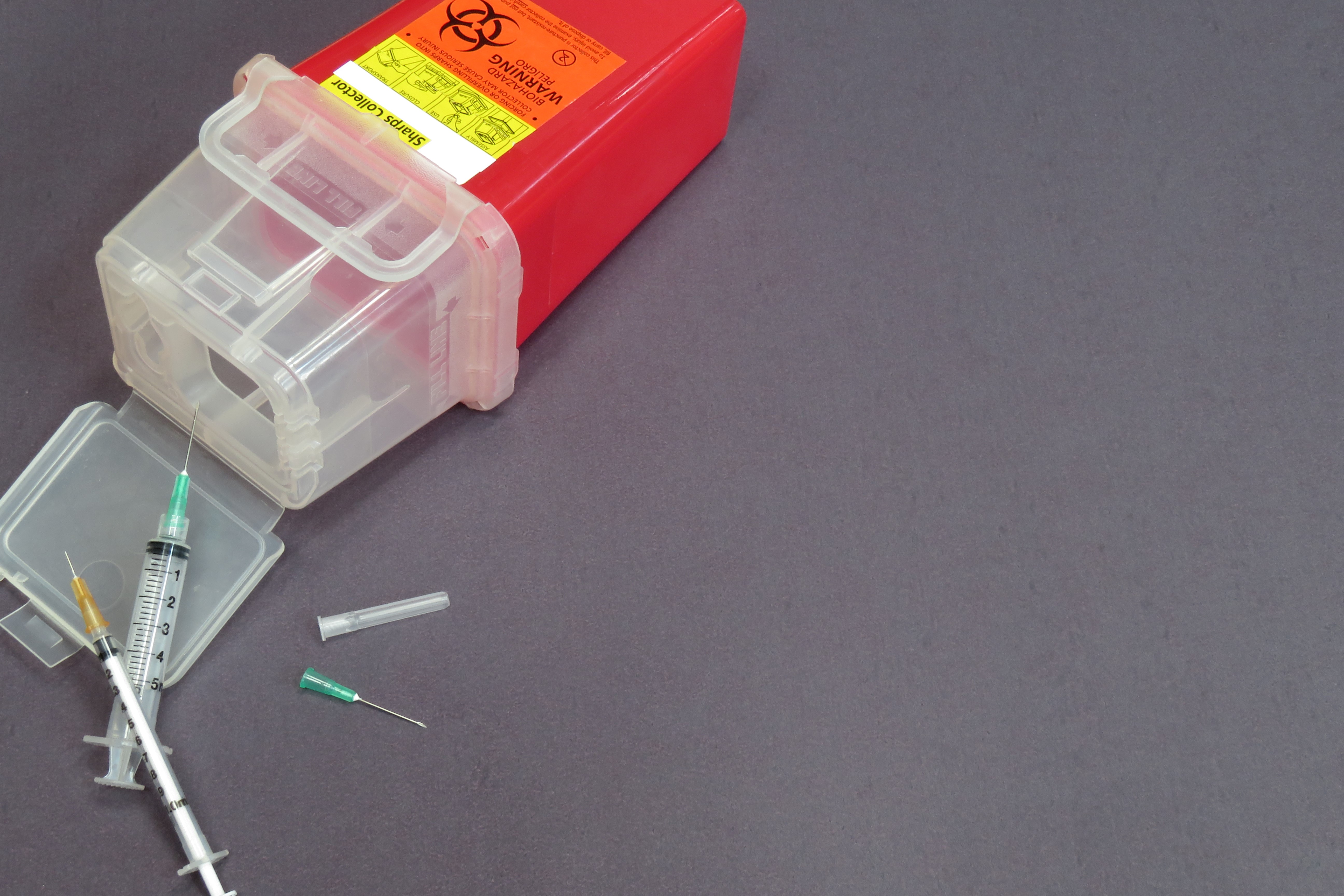
Syringe Services Programs (SSPs) are harm reduction programs that provide a wide range of services including, but not typically limited to, the provision of new, unused hypodermic needles and syringes and other injection drug use supplies, such as cookers, tourniquets, alcohol wipes, and sharps waste disposal containers, to people who inject drugs. SSPs, initially limited to the exchange of hypodermic needles and syringes and often still called needle or syringe exchange programs, have been present in the United States in some form since the early 1980s. Often illegal due to drug paraphernalia laws – an issue that still exists today – only seven U.S. cities had programs by the end of 1991.  According to the Centers for Disease Control and Prevention (CDC), in November 2007, there were 185 SSPs in 36 states, the District of Columbia, and Puerto Rico. As of February 2022, that number has increased to 414 operational SSPs in all 50 states, the District of Columbia, and Puerto Rico, although only 38 states, the District of Columbia, and Puerto Rico either explicitly or implicitly authorize SSPs through statute or regulation. This fact sheet provides readers with an overview of SSPs, including the components that make up a...

The Bloomberg School of Public Health at Johns Hopkins University recently released a three-part report about the multi-district opioid litigation that has been making its way through the court system for many years. Part 1 of the trilogy, focuses on a series of principles governing the use of the settlement funds: (1) spending money to save lives; (2) using evidence to guide spending; (3) investing in youth prevention; (4) focusing on racial equity; and (5) developing a fair and transparent process for deciding where to spend the funding....