


Stimulants

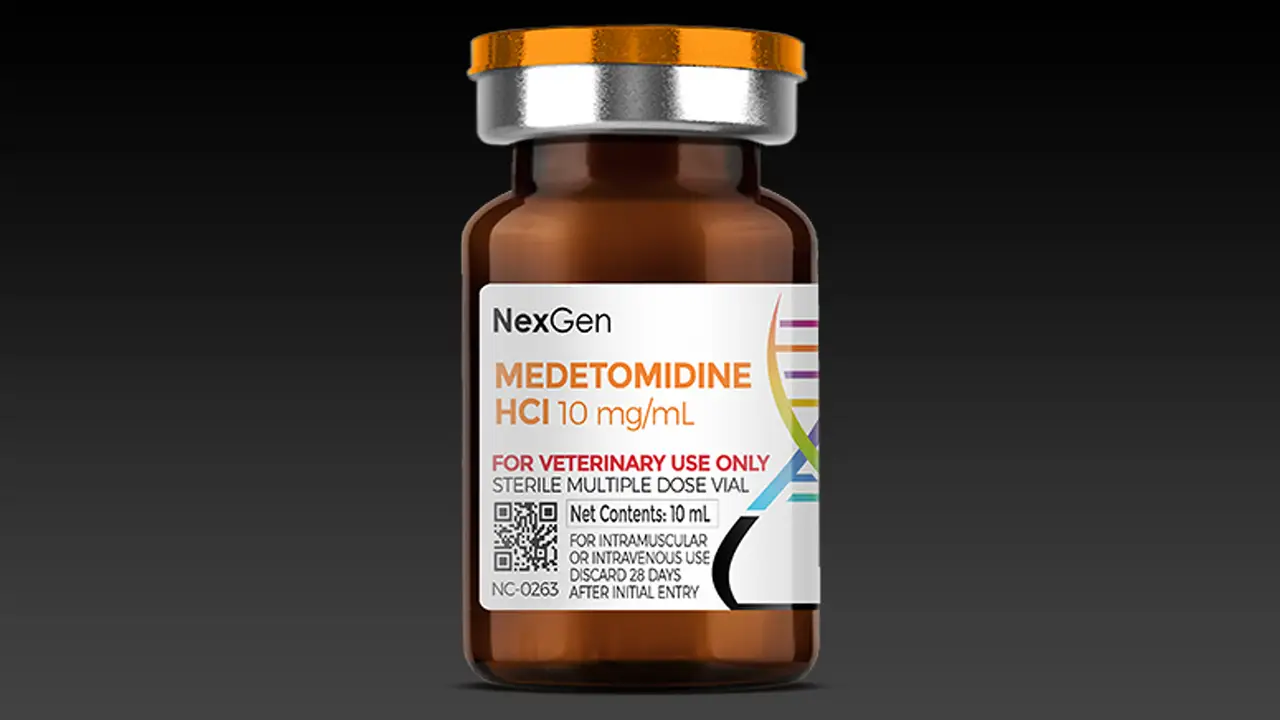
The Legislative Analysis and Public Policy Association is monitoring the emergence of novel psychoactive substances appearing on the illicit drug market in the United States. The term “novel” does not denote a new, never-before-seen substance but rather a substance that is newly available in the drug market. This fact sheet examines medetomidine, a powerful veterinary sedative that has been appearing as an adulterant in fentanyl mixtures in the U.S. Medetomidine is a synthetic alpha-2 agonist that is used as a sedative in veterinary medicine and sold under the brand name Domitor®. Medetomidine belongs to the same drug class as xylazine, but its potency is 200 times greater, and has a longer duration of action, than xylazine. The U.S. Food and Drug Administration has only approved medetomidine for use in veterinary medicine, and information about the use of the substance in humans is limited. The effects of medetomidine on humans are not well understood but include prolonged sedation, slow heart rate, slowed breathing, and low blood pressure. Similar to xylazine, the combination of medetomidine with other substances, like fentanyl, can enhance or prolong the effects of the substance and place the individual at a higher risk of overdose than from the...

The Legislative Analysis and Public Policy Association is monitoring the emergence of novel psychoactive substances appearing on the illicit drug market in the United States. The term “novel” does not denote a new, never-before-seen substance but rather a substance that is newly available in the drug market. This fact sheet,  examines xylazine, a powerful veterinary sedative increasingly appearing as an adulterant in heroin and fentanyl mixtures in the U.S., particularly since 2020. Xylazine has a chemical structure similar to compounds called phenothiazines and operates by decreasing the release of norepinephrine and dopamine in the central nervous system, resulting in analgesia, sedation, and muscle relaxation. Xylazine intoxication can result in central nervous system depression, low blood pressure, and slow heart rate. Respiratory depression can also occur, which increases the risk of overdose when combined with opioid-induced respiratory depression. ...

Total abstinence has historically been the goal of treatment for substance use disorders; however, there is a growing recognition of the health benefits associated with reduced use as a harm reduction measure in stimulant use disorders treatment. The researchers and authors of this report aimed to assess the validity of reduced stimulant use as an outcome measure in randomized controlled trials of pharmacological interventions for stimulant use disorder....

This fact sheet examines the racial disparities and stigma surrounding crack cocaine, established in the late 1980s, that continue to this day. The Fair Sentencing Act has helped to lessen the sentencing disparity between crack and powder cocaine, yet gaps remain. Passage of certain legislation, like the EQUAL Act, which was introduced in the 118th Congress in 2023, would eliminate both the sentencing and racial disparity in cocaine sentencing still seen today in U.S. courts....

The purpose of this report was to assess immediate and sustained changes in overall illicit substance ingestion rates among children younger than six before and during the COVID-19 pandemic and to examine changes by substance type, including amphetamines, benzodiazepines, cannabis, cocaine, ethanol, and, opioids. Researchers concluded that there was a sustained increase in illicit substance ingestion during the pandemic and that additional studies are needed to contextualize these findings in the setting of pandemic-related stress....

Millions of people throughout the world use social media platforms (or “apps”) that provide an easy avenue to reach a large number of people. Legitimate businesses are not the only ones to use social media apps as a marketing tool. In recent years, drug dealers have turned to such apps to solicit buyers and arrange sales. This fact sheet examines the growing use of social media, by drug suppliers, to surreptitiously advertise to a wide audience, by using apps that offer encrypted or disappearing messages....

The Legislative Analysis and Public Policy Association is monitoring the emergence of novel psychoactive substances appearing on the illicit drug market in the United States. The term “novel” does not denote a new, never-before-seen substance but rather a substance that is newly available in the drug market. This fact sheet,  examines pyro, a relatively new high potency synthetic opioid increasing in prevalence in the U.S. Pyro belongs to an opioid subclass of NPS called 2-benezylbenzimidazoles, or nitazenes, and is structurally similar to etonitazene, a synthetic opioid that is nationally and internationally controlled. N-pyrrolidino etonitazene is not described or mentioned in any medical literature or patents, meaning that it is a truly “novel” NPS and likely developed independently from the pharmaceutical industry. Researchers believe that N-pyrrolidino etonitazene is coming to the U.S. via purchases on the dark web and is likely being produced in China. N-pyrrolidino etonitazene can be found in powder form or pressed into pills to resemble other substances. Studies estimate that N-pyrrolidino etonitazene is over 800 times more potent than morphine and 20-40 times more potent than fentanyl. Like other opioids, N-pyrrolidino etonitazene use can potentially cause fatal respiratory depression in the person ingesting the drug. However, because...