


Fact Sheets

Syringe Services Programs (SSPs) are harm reduction programs that provide a wide range of services including, but not typically limited to, the provision of new, unused hypodermic needles and syringes and other injection drug use supplies, such as cookers, tourniquets, alcohol wipes, and sharps waste disposal containers, to people who inject drugs. SSPs, initially limited to the exchange of hypodermic needles and syringes and often still called needle or syringe exchange programs, have been present in the United States in some form since the early 1980s. Often illegal due to drug paraphernalia laws – an issue that still exists today – only seven U.S. cities had programs by the end of 1991.  According to the Centers for Disease Control and Prevention (CDC), in November 2007, there were 185 SSPs in 36 states, the District of Columbia, and Puerto Rico. As of February 2022, that number has increased to 414 operational SSPs in all 50 states, the District of Columbia, and Puerto Rico, although only 38 states, the District of Columbia, and Puerto Rico either explicitly or implicitly authorize SSPs through statute or regulation. This fact sheet provides readers with an overview of SSPs, including the components that make up a...

Smaller than a pencil, and using the same technology as an at-home pregnancy test, fentanyl test strips are disposable, single-use tests that can detect the presence of fentanyl or fentanyl analogs in a substance. This fact sheet sets forth how fentanyl test strips work as a drug checking tool, how they can mitigate risks to people with substance use disorder, and the current challenges with their legality....

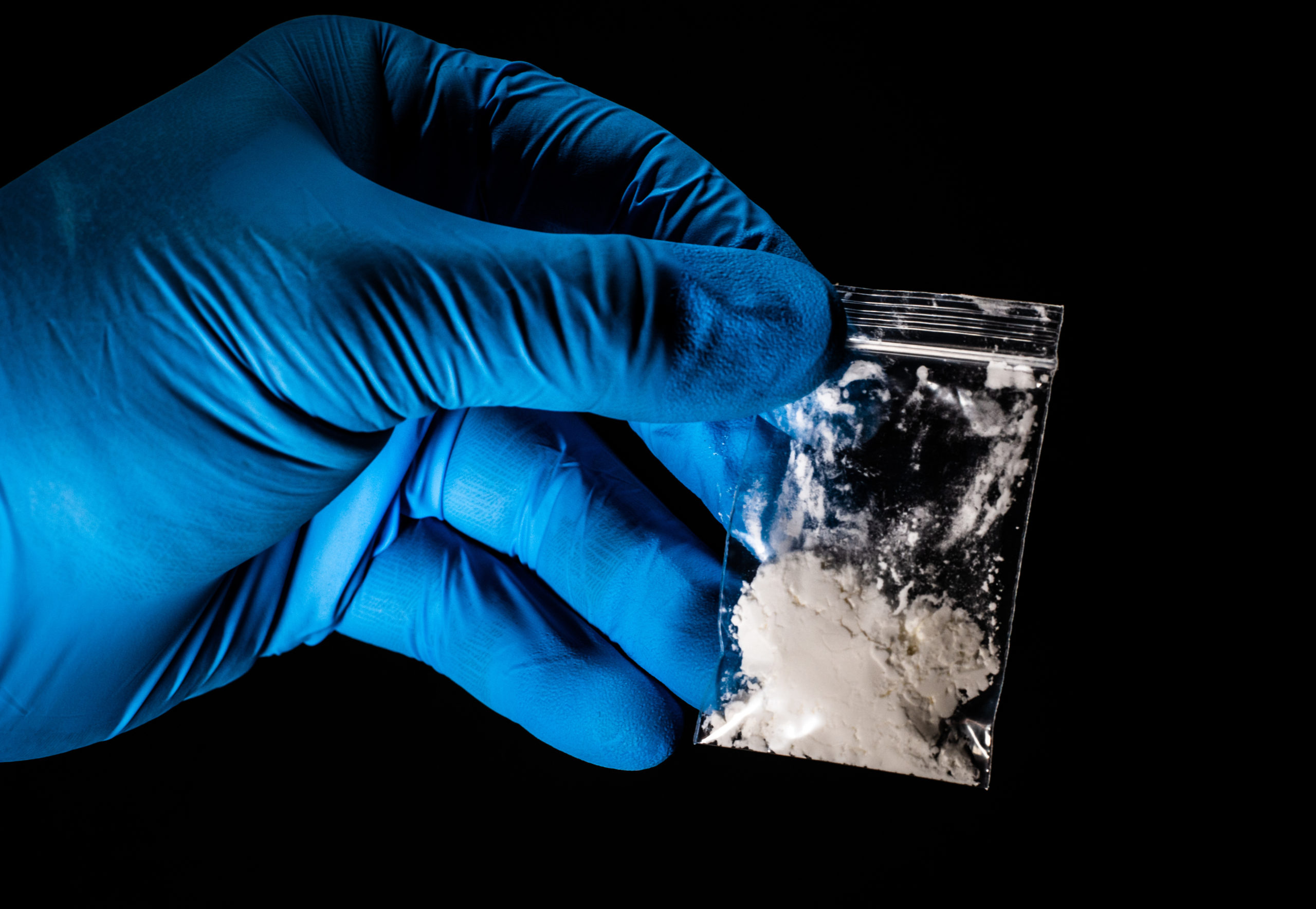
After domestic production of methamphetamine increased significantly in the 1990s, federal and state authorities took action to address the hazardous conditions left behind in meth labs. Congress passed legislation directing the U.S. Environmental Protection Agency to establish meth decontamination guidelines based on the best available scientific knowledge. Today, the synthetic opioid fentanyl and its analogues cause over twice as many overdose deaths in the United States yearly as meth. Its effects, though similar to morphine or heroin, are 50 to 100 times more powerful, making even small amounts dangerous to users and bystanders alike. Despite this, as of 2021, the scale of federal and state action on fentanyl cleanup is not comparable to that historically taken against meth labs. Fentanyl is a relative newcomer to the scene of illicit drugs in the United States, so scientific authorities and policymakers have had less time to address the issue of clean up. In the interim, the lack of authoritative guidance and policy creates risks, as outlined in this fact sheet....

New psychoactive substances (NPS) are “substances of abuse, either in pure form or a preparation, that are not controlled by [international drug conventions], but which may pose a public health threat.” The term “new” (or “novel” in some publications) does not denote a brand new, never-before-seen substance, but a substance that is newly available in the drug market. NPS is a catch-all phrase that includes substances like bath salts, synthetic cannabinoids, synthetic opioids, synthetic cathinones, and other drugs of abuse that are not currently scheduled or controlled. This fact sheet provides general information about new and emerging drugs of abuse....

This fact sheet provides information about the Pay for Success Funding Initiatives, which involve, at a minimum, four parties: (1) the service provider/social program; (2) an investor or investors; (3) an independent evaluator; and (4) a traditional funder or “outcomes payor,” usually a branch of federal, state, or local government....

While no set definition for polypharmacy exists, it is generally defined as the concurrent use of several prescribed medicines. Medical studies vary in how many simultaneous prescriptions qualify as polypharmacy, but many researchers set the threshold at five or more different prescription medications per day. In some cases, polypharmacy can lead to duplicate prescriptions or contraindicated prescribed drug combinations which may result from poor communication between an individual’s health care provider(s) and pharmacy or the patient’s own lack of understanding and knowledge. As people age, they have an increased chance of developing chronic conditions and comorbidities. Not surprisingly, elderly  individuals in the United States are the likeliest cohort of adults to take multiple medications daily to treat or manage one or more medical conditions; this is referred to as “polypharmacy.” Research suggests that over half of elderly individuals report taking four or more prescription drugs, compared to only about one-third of adults aged 50-64, and one-in-ten of adults aged 18-49. This fact sheet provides information about Polypharmacy, which can have many serious adverse effects, particularly in the elderly population....

The first recovery high schools were intended to provide post-treatment services immediately after an adolescent left a residential treatment or outpatient program and continue to evolve. In addition to providing students with an education, recovery high schools’ intense post-treatment services often include: (1) help with focusing on relapse prevention; (2) encouraging compliance with a wide range of social services to provide additional support; (3) teaching problem-solving skills so that students can learn to cope with anger, depression, and anxiety; and (4) providing a non-using social network. Recovery high schools, designed specifically for students recovering from a substance use disorder, also provide ancillary programs to encourage familial involvement in the teen’s recovery. ...

In the early 1970’s, as part of its efforts to increase treatment for substance use disorder and reduce the stigma surrounding such treatment, the federal government enacted the Drug Abuse Office and Treatment Act of 1972. That Act included a statutory provision for the confidentiality of patient records, now codified at 42 U.S.C. § 290dd-2. This section provides the legal basis for regulations first adopted in 1975 that supplement and expand on the confidentiality provisions of 42 U.S.C. § 290dd-2. These regulations, known colloquially as “42 C.F.R. Part 2” or just “Part 2”, provide increased protection for the records of patients receiving treatment for substance use disorder. Subsequent amendments over the years to both 42 U.S.C. § 290dd-2 and 42 C.F.R. Part 2 served to modernize, clarify, and expand upon the protections granted by the original provisions. This fact sheet provides information about federal laws related to privacy protections for treatment records....