


Spending Opioid Settlement Proceeds: Choices and Challenges for Governments (UPDATE) – a FACT SHEET by the Legislative Analysis and Public Policy Association
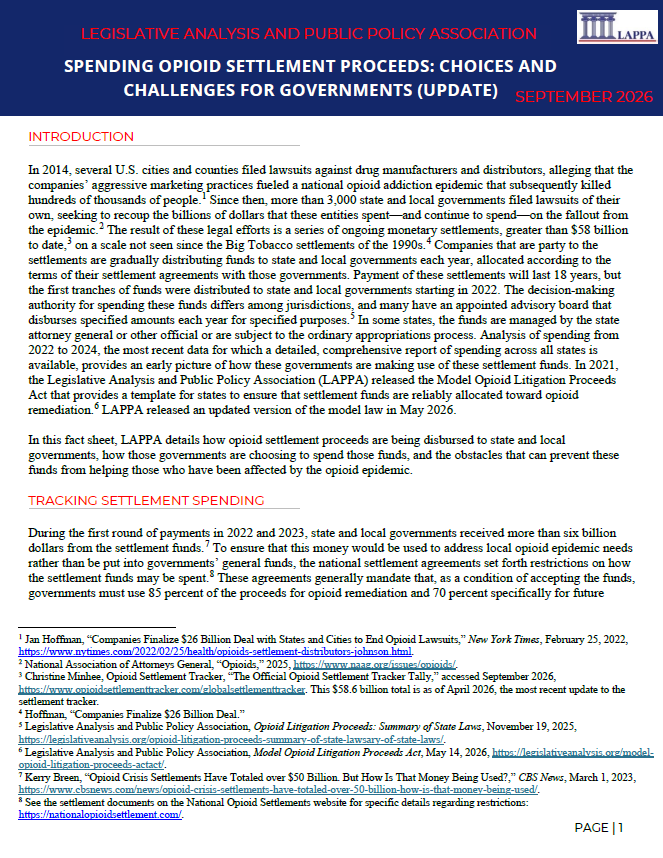
In 2014, several U.S. cities and counties filed lawsuits against drug manufacturers and distributors, alleging that the companies’ aggressive marketing practices fueled a national opioid addiction epidemic that subsequently killed hundreds of thousands of people. Since then, more than 3,000 state and local governments filed lawsuits of their own, seeking to recoup the billions of dollars that these entities spent—and continue to spend—on the fallout from the epidemic. The result of these legal efforts is a series of ongoing monetary settlements, greater than $58 billion to date, on a scale not seen since the Big Tobacco settlements of the 1990s. Companies that are party to the settlements are gradually distributing funds to state and local governments each year, allocated according to the terms of their settlement agreements with those governments. Payment of these settlements will last 18 years, but the first tranches of funds were distributed to state and local governments starting in 2022. The decision-making authority for spending these funds differs among jurisdictions, and many have an appointed advisory board that disburses specified amounts each year for specified purposes. In some states, the funds are managed by the state attorney general or other official or are subject to the ordinary appropriations process. Analysis of spending from 2022 to 2024, the most recent data for which a detailed, comprehensive report of spending across all states is available, provides an early picture of how these governments are making use of these settlement funds. In 2021, LAPPA released the Model Opioid Litigation Proceeds Act that provides a template for states to ensure that settlement funds are reliably allocated toward opioid remediation. LAPPA released an updated version of the model law in May 2026. In this fact sheet, LAPPA details how opioid settlement proceeds are being disbursed to state and local governments, how those governments are choosing to spend those funds, and the obstacles that can prevent these funds from helping those who have been affected by the opioid epidemic.
Read the Fact Sheet.